
About the Fellowship Association
OUR HISTORY
In 2003, fellowship alumni established the John Gardner Fellowship Association to bring together alumni of the John Gardner Fellowship Program for the purposes of self-renewal, job growth, leadership training, and social networking. While independent of Stanford University and UC Berkeley, the JGFA is dedicating to furthering the mission of the John Gardner Fellowship Program at both schools. The JGFA was started in 2003, now has 182 members and is entirely run by volunteers.
40th Anniversary Retreat
In honor of the 40th anniversary of the fellowship, we are hosting a retreat at Stanford University on March 21-23. The retreat will feature panels of Gardner alumni, discussions on the future of public service, and opportunities to meet new fellows new. You can register for the retreat here and find the draft agenda here.
There is funding available for travel expenses as well as hotels. For further information please contact Kevin Klyman (kevin [dot] klyman [at] berkeley [dot] edu).
MISSION STATEMENT
The mission of the John Gardner Fellowship Association (JGFA) is to:
- Promote the values and ideals exemplified by John Gardner.
- Bring together members for the purpose of renewal and inspiration.
- Encourage and support the ongoing involvement of its members in public service.
- Ensure the Fellowship program has adequate resources for success.
- Engage the universities and members to fulfill the goals of the Fellowship.
JGFA OFFICERS
- Kevin Klyman, Co-President
- Paras Shah, Co-President
- Marco Ramirez, Secretary
- Michael Jones, Treasurer
JGFA BOARD OF DIRECTORS
- Christina Boiles
- Kori Kelley Meehan
- Jon Welner
- Sandy Tesch Wilkins
- Linda Yeung
- Anna Ferrari
FELLOWSHIP ADMINISTRATORS
- Terri Bimes, Fellowship Administrator—UC Berkeley
- Ben Weissman, Fellowship Administrator—Stanford
About the Gardner Fellowship
THE JOHN GARDNER PUBLIC SERVICE FELLOWSHIP
The University of California, Berkeley and Stanford University jointly established the John Gardner Public Service Fellowship Program in 1985 to encourage new Stanford and UC Berkeley graduates to invest their talent, energy, and training in public service. Since then, over 200 public service fellows have launched careers in service leadership across all sectors, including placements at the United Nations, U.S. Senate, Children’s Defense Fund and many more.
Each spring, six graduating seniors (three from Berkeley and three from Stanford), are selected as John Gardner Public Service Fellows. Fellows are awarded upwards of $40,000 for a ten-month mentorship assignment with a senior leader in government or a nonprofit.
More information about the Gardner Fellowship Program and how to apply can be found at the John Gardner Fellowship Program websites at UC Berkeley and Stanford. If you have questions, please feel free to contact the administrators at each school:
The John Gardner Fellowship Program at Stanford University
Administrator: Benjamin Weissman
The John Gardner Fellowship Program at UC Berkeley
Administrator: Terri Bimes
About John Gardner
BIOGRAPHY
John W. Gardner was born in Los Angeles on Oct. 8, 1912. He earned a bachelor’s and a master’s degree in psychology from Stanford in 1935 and 1936, respectively. In 1938, he received a doctorate from the University of California, Berkeley.
Gardner began his working life teaching psychology at Connecticut College for Women. As the United States entered World War II, he was asked to head the Latin American section of the Foreign Broadcast Intelligence Service and, in 1943, he joined the Marine Corps. After the war ended, he joined the Carnegie Corporation, becoming its president in 1955. Gardner also was named head of the Carnegie Foundation for the Advancement of Teaching and, in that capacity, laid the groundwork for establishing the White House Fellows program in 1964.
From the 1960s onward, John W. Gardner played a major role in civil rights enforcement, education reform and campaign finance reform. He was instrumental in the creation of Medicare, in establishing the public television network and supporting community volunteer service. In 1964, Gardner received the Presidential Medal of Freedom, the nation’s highest civil honor. He founded Common Cause and headed the Urban Coalition, chaired numerous presidential task forces and commissions and mentored many public service organizations.
TIMELINE OF MULTI-SECTOR SERVICE
1965—President Lyndon B. Johnson appointed Gardner secretary of the Department of Health, Education and Welfare, playing an important role in enforcing the 1964 Civil Rights Act, launching Medicare, passing the 1965 Elementary and Secondary Education Act and creating the Corporation for Public Broadcasting.
1968—Gardner resigned from HEW and became chairman of the Urban Coalition, an organization that brought together leaders from labor, industry and government to tackle the underlying problems that fueled riots in cities nationwide that year.
1970—Gardner founded Common Cause, a citizen’s advocacy group that aimed to make political institutions more open and accountable. Common Cause was instrumental in gaining adoption of landmark legislation that placed limits on political contributions and instituted disclosure requirements for electoral campaigns.
1977—Gardner retired from Common Cause to become chairman of the Commission on White House Fellowships.
1979—Gardner co-founded Independent Sector, an organization that supported hundreds of non-profit groups nationwide.
2000—the John W. Gardner Center for Youth and Their Communities was established at Stanford, in honor of Gardner’s lifetime of public service. The center’s mission is to conduct research, educate the public and persuade diverse groups such as schools, law enforcement and government to work together to seek more effective solutions to the problems facing youth.
Excerpted from Stanford University’s John W. Gardner Center for Youth and their Communities.
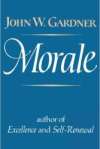
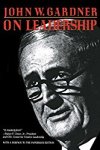
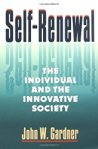
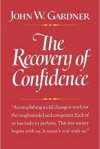
BOOKS BY JOHN GARDNER


 John Gardner Fellowship
You must be logged in to post a comment.